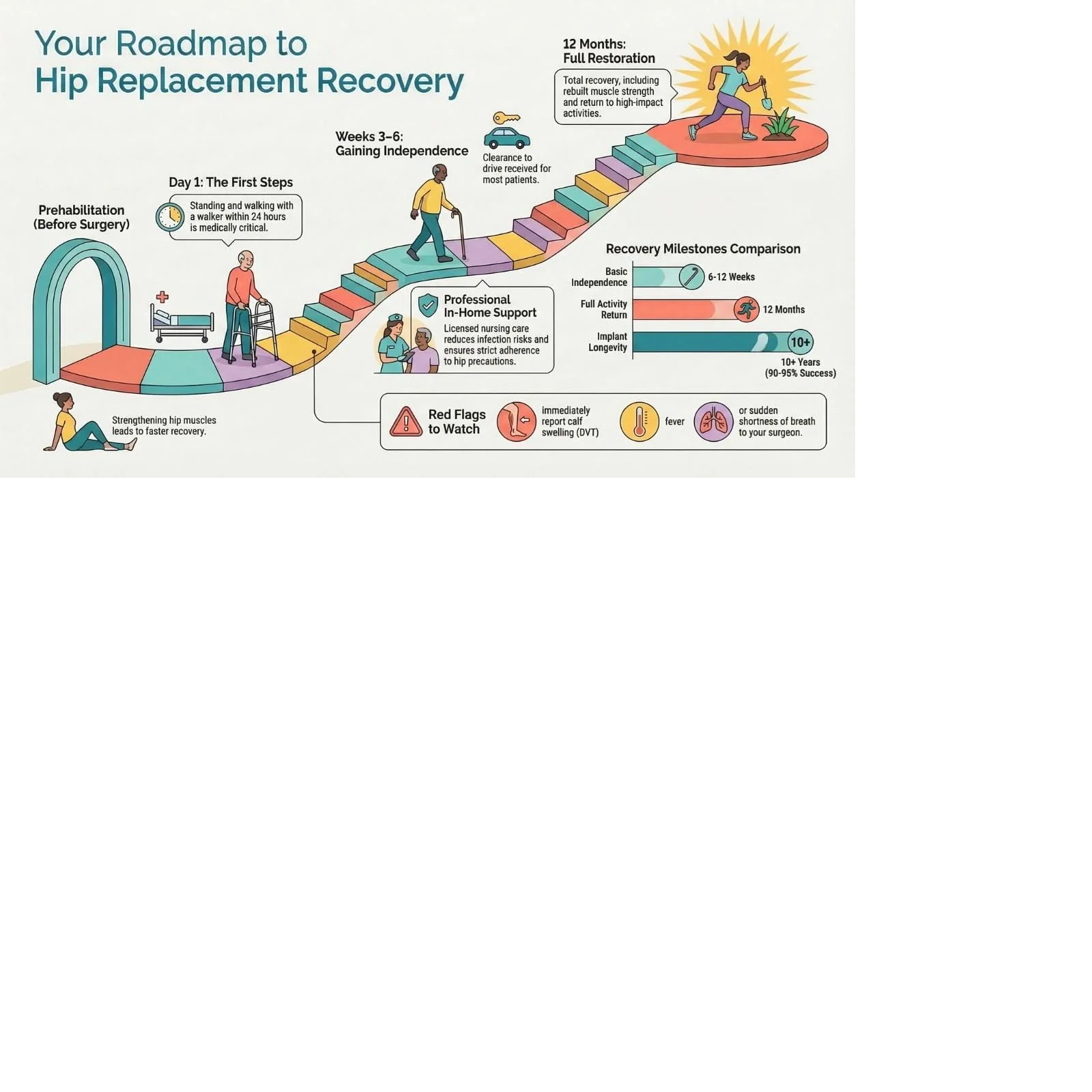
Cold therapy wraps for hip replacement recovery address one of the most challenging post-surgical swelling and pain management situations in orthopedic care — a large, deep joint with significant surrounding soft tissue that generates substantial inflammatory response after the extensive surgical intervention that hip replacement involves. Total hip arthroplasty is one of the most commonly performed orthopedic procedures, and the quality of post-surgical swelling and pain management in the days immediately following the procedure has a direct and documented effect on how quickly rehabilitation progresses and how complete the functional recovery ultimately is.
Why Hip Replacement Recovery Presents Specific Challenges
The hip joint presents cold therapy challenges that other orthopedic applications don’t encounter in quite the same combination. It’s one of the body’s deepest joints — surrounded by significant layers of muscle and soft tissue that the cold needs to penetrate to reach the joint capsule where post-surgical inflammation is most concentrated. Its location makes positioning for cold therapy application more complicated than upper extremity joints, particularly in the first days after surgery when mobility is significantly limited and positioning requires assistance.
The surgical approach to hip replacement — whether anterior, posterior, or lateral — creates trauma across a substantial soft tissue area that generates swelling beyond the joint itself. Post-surgical edema in the hip region can extend down the thigh and toward the knee, and upward into the lower abdominal and flank region in some patients. Effective cold therapy for hip replacement recovery needs to address this extended swelling area rather than targeting only the joint line.
The weight-bearing demands of hip recovery — even with assistive devices, the hip bears significant load during the transfers and early mobility that rehabilitation requires from the first post-operative day — compound the swelling management challenge by periodically loading the joint in ways that redistribute rather than reduce edema.
How Purpose-Built Hip Wraps Differ From Standard Ice Packs
A standard flat gel pack placed over the hip provides cold contact to whatever surface area it covers — which in the complex three-dimensional anatomy of the hip region is a fraction of the area generating post-surgical inflammation. The lateral aspect, the anterior incision site, and the posterior soft tissue trauma all require cold contact simultaneously for comprehensive swelling management, which a flat pack placed in any single position doesn’t achieve.
Purpose-built orthopedic cold compression wraps designed for hip application wrap around the hip joint complex, conforming to the anatomical contours that a flat pack bridges across rather than contacts. That circumferential coverage delivers therapeutic cold to all aspects of the surgical site simultaneously — which is what produces meaningful swelling reduction rather than surface-level cooling of the most accessible aspect of the joint.
The compression component that a conforming wrap delivers independently of the cold supports the lymphatic drainage process that moves post-surgical edema away from the joint — an effect that cold alone without compression doesn’t achieve. When cold and compression work together through a wrap that maintains position without constant manual support, the combined therapeutic effect consistently outperforms ice-only approaches in managing the substantial swelling that hip replacement generates.
Duration Requirements for Hip Recovery
The volume of post-surgical swelling that hip replacement produces — significantly greater than smaller joint procedures — means that cold therapy duration requirements are more demanding than for procedures with more localized inflammatory responses. Standard consumer ice packs that maintain effective cold for 20 to 30 minutes require frequent replacement throughout the day and provide no coverage during overnight rest periods when the inflammatory process continues without interruption.
Extended-duration cold therapy products that maintain therapeutic temperature for three or more hours allow sustained overnight coverage that standard products can’t provide — which addresses the inflammatory process during the hours when patients most need uninterrupted rest and when active management of cold therapy replacement is least practical. For caregivers supporting a family member through hip replacement recovery, extended-duration products also reduce the frequency of assistance required for cold therapy management during a period when the patient’s limited mobility means they can’t manage pack changes independently.
Hospital Discharge and Home Recovery Planning
One of the most consistent gaps in hip replacement recovery is the transition from hospital to home — where the cold therapy resources available in a hospital setting aren’t always replicated at home with equivalent effectiveness. Patients discharged with standard ice bags or told to use frozen vegetables are managing one of the most demanding post-surgical swelling situations with tools that aren’t suited to the task.
Planning for appropriate cold therapy before the procedure — understanding what products are available, how to use them correctly, and having them at home before discharge — is what prevents the situation where the first days at home, when swelling management is most critical to the recovery trajectory, are managed with inadequate resources. The use instructions provided with purpose-built cold therapy products guide patients through application technique, positioning, duration, and frequency in ways that make self-management at home realistic during a period when mobility is significantly limited.
Integration With Physical Therapy Protocols
Physical therapy for hip replacement begins remarkably early — often the day of surgery — and the pace of rehabilitation progression directly affects long-term functional outcomes. Cold therapy that adequately manages the post-exercise inflammatory response supports the ability to participate in therapy sessions at the intensity and frequency that optimal recovery requires, while inadequate swelling management limits the tolerable therapy intensity and slows the progression that determines when the patient returns to full function.
Reusable cold therapy wraps applied before and after physical therapy sessions — in coordination with the rehabilitation protocol rather than independently — produce the most consistent benefit for hip replacement patients working through the demanding early weeks of recovery.