




Copper is an essential trace element involved in numerous biological processes, but its behavior depends heavily on the molecules with which it interacts. Inside living systems, copper rarely exists as an isolated metal ion. Proteins, enzymes and smaller molecular structures participate in regulating its distribution and chemical activity.
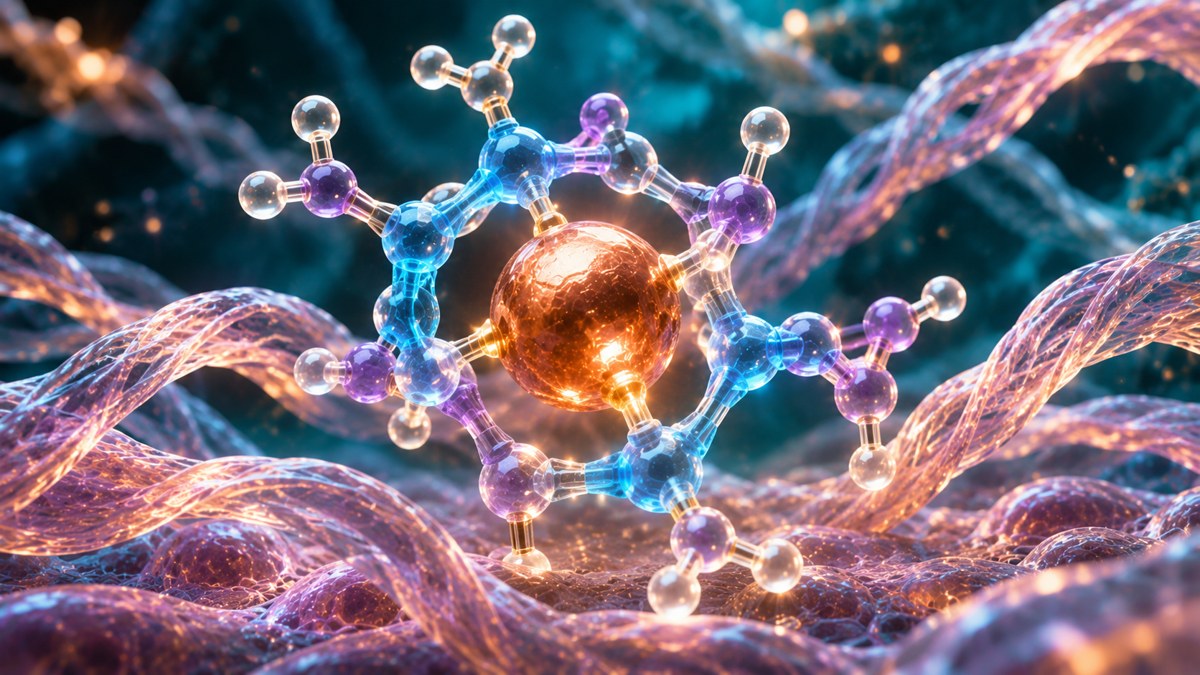
One particularly interesting example is glycyl-L-histidyl-L-lysine, commonly abbreviated as GHK. This naturally occurring tripeptide can form a complex with copper, producing the molecular structure generally described as GHK-Cu.
For several decades, researchers have investigated this copper-associated peptide in relation to extracellular matrix biology, cellular communication and experimental tissue repair. More recent scientific publications have raised important questions about how its chemical characteristics are defined and how laboratory findings should be interpreted.
Understanding these questions requires examining the relationship between copper chemistry, peptide structure and biological evidence rather than assuming that every reported molecular effect represents an established medical benefit.
Why Copper Behaves Differently When It Is Bound to Another Molecule
Metal ions can interact with surrounding chemical structures through coordination bonds. These interactions influence their chemical properties and determine how they participate in biological systems.
Copper is particularly interesting because it can exist in different oxidation states. Its ability to participate in electron-transfer reactions makes it relevant to numerous biochemical processes.
However, the same chemical properties that make copper biologically useful also create challenges. Its interactions must be regulated because uncontrolled chemical reactions involving metals can contribute to cellular damage.
Biological systems contain specialized proteins and other molecules that participate in copper transport, distribution and regulation. These structures help determine where copper is available and how it interacts with cellular components.
For readers exploring Savannah peptide science resources, this relationship between molecular structure and chemical behavior provides useful context for understanding metallopeptide research.
A metallopeptide is a peptide associated with a metal ion. Its scientific characteristics cannot necessarily be established by examining the peptide sequence or the metal independently.
What Makes GHK-Cu Chemically Interesting?
GHK contains three amino acid residues: glycine, histidine and lysine. Although its molecular structure is relatively small compared with larger proteins, it contains chemical groups capable of interacting with copper ions.
When copper coordinates with the peptide, the resulting complex can exhibit characteristics that differ from those of its separate components.
This distinction introduces several analytical questions. Researchers need to establish whether the intended complex is present, whether alternative chemical forms coexist within the sample and how those forms behave under experimental conditions.
Simply detecting copper and identifying the peptide sequence does not necessarily establish the precise relationship between them.
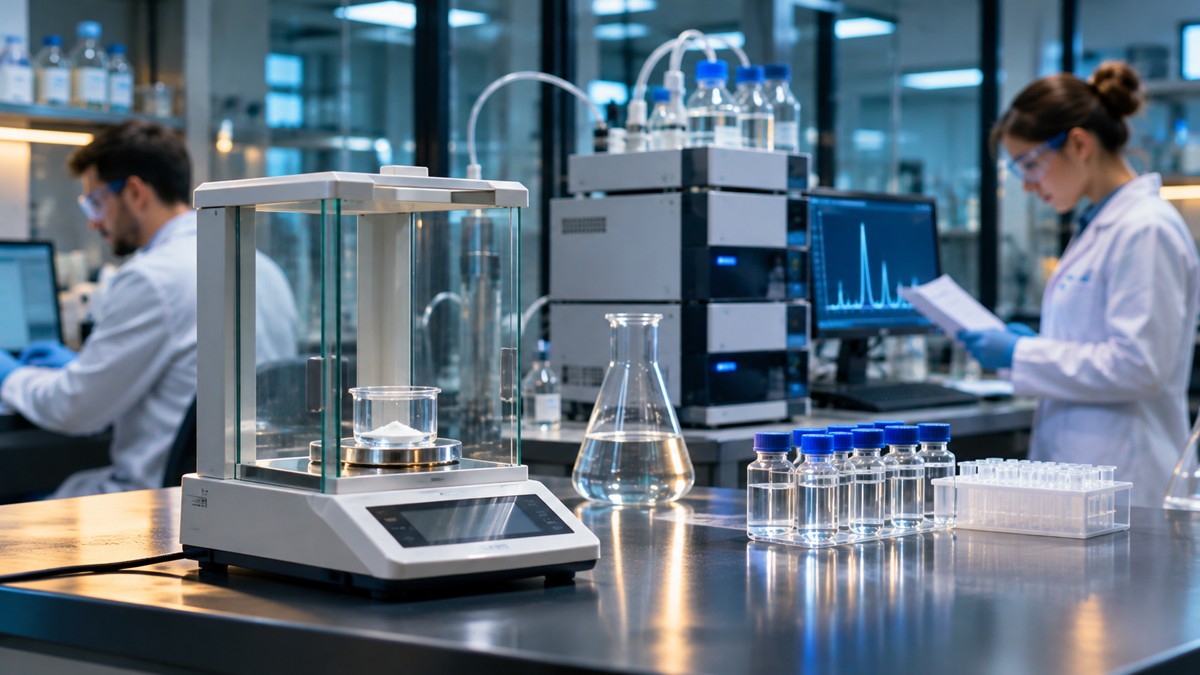
Consider a hypothetical laboratory sample containing a known quantity of copper alongside a known quantity of GHK. Those measurements provide information about the overall composition of the material. However, they do not independently establish which copper-associated molecular structures are present.
Understanding that distinction becomes particularly important when investigators attempt to connect a specific chemical structure with an observed biological response.
The Extracellular Matrix Is More Than a Structural Framework
Much of the scientific interest surrounding copper peptides concerns the extracellular matrix. This complex network surrounds cells and contributes to the organization and mechanical properties of tissues.
The extracellular matrix contains proteins, carbohydrates and other molecular components. Collagen contributes structural support, while additional components influence tissue hydration, organization and communication between cells.
Fibroblasts are among the cell populations involved in producing and reorganizing extracellular matrix materials. Their activities can change in response to biological signals, environmental conditions and tissue damage.
Researchers studying matrix biology therefore investigate both the production of individual molecular components and their organization within a larger biological system.
Measuring the abundance of one protein provides only part of the available information. Tissue function also depends on how molecular components interact, how they are organized and how their characteristics change over time.
What Historical Copper Peptide Experiments Actually Examined
A notable investigation published by François-Xavier Maquart and colleagues in the Journal of Clinical Investigation in 1993 examined GHK-Cu in an experimental wound model involving rats.
The researchers investigated connective tissue accumulation and measured changes involving extracellular matrix components. Their findings helped establish scientific interest in the relationship between copper-associated peptides and matrix biology.
However, the study concerned an animal model rather than a controlled human clinical investigation. Its observations cannot independently establish that the same compound produces meaningful healing outcomes in people.
Readers examining scientific research on GHK-Cu should consider the experimental model, comparison conditions and specific measurements when evaluating historical findings.
The publication of an interesting laboratory observation does not eliminate the need for further research. It establishes a scientific starting point from which additional hypotheses can be investigated.
Why Scientists Need to Separate Copper Effects From Peptide Effects
One challenge in metallopeptide research involves determining which component contributes to an observed biological response.
A copper-associated peptide contains chemical characteristics belonging to both its peptide structure and its metal component. Consequently, a biological observation involving the complex may raise several possible explanations.
The response could depend on the intact molecular complex. It could involve interactions associated with copper or the peptide separately. It could also reflect a combination of processes occurring within the experimental system.
A November 2026 commentary published in Aesthetic Surgery Journal examined this issue in relation to GHK-Cu research. It discussed experiments in which separate chemical components reproduced certain observations attributed to the combined complex, while other findings could not be explained in the same way.
These distinctions show why identifying a biological response is not equivalent to establishing its complete molecular mechanism.
Researchers must evaluate competing explanations rather than assuming that every observed change originates from a unique signaling pathway associated with the intact copper-peptide complex.
Why Collagen Measurements Do Not Automatically Demonstrate Better Skin Function
Collagen is an important structural component of skin and numerous other tissues. Changes in collagen production therefore represent a relevant subject of biological investigation.
Nevertheless, the quantity of collagen present within an experimental system does not independently establish the functional condition of a tissue.
Collagen molecules must participate in organized structures that interact with other extracellular matrix components. Their arrangement and mechanical characteristics contribute to the properties of the surrounding tissue.
Excessive or poorly organized matrix accumulation can also occur in biological circumstances that do not represent improved tissue function.
For this reason, researchers need to distinguish between measurements of molecular production and measurements of meaningful functional outcomes.
A laboratory experiment demonstrating a change in collagen-related activity may support additional investigation into cellular mechanisms. It does not establish improved skin appearance, successful wound healing or reversal of age-associated changes in humans.
Those outcomes require evidence from investigations specifically designed to measure them.
Recent Research Is Reconsidering How Copper Peptides Are Defined
In August 2026, Diana-Maria Mateescu and colleagues published an evidence review in the journal Pharmaceutics examining GHK-Cu chemistry, formulation characteristics and biological research.
The authors identified differences in how published investigations characterize copper-associated peptide materials. Their assessment also highlighted the limited human clinical evidence and the difficulty of comparing studies involving differently defined formulations.
This is an important scientific consideration because the same abbreviated compound name can appear in publications describing materials with different chemical characteristics.
Researchers cannot automatically combine findings from these investigations without considering whether the materials, experimental conditions and measured outcomes are sufficiently comparable.
The review illustrates a broader principle in biomedical research: evidence describing a molecular mechanism must be interpreted separately from evidence establishing clinical effectiveness.
Additional research can strengthen understanding of the chemical and biological questions without necessarily confirming a proposed medical application.
Why Safety Questions Remain Separate From Molecular Research
Understanding how a molecule interacts with a biological system is not the same as establishing its safety.
The United States Food and Drug Administration has identified potential immune-response concerns involving certain compounded GHK-Cu preparations, including uncertainty related to molecular aggregation and peptide impurities. The agency also notes limitations in the available human safety information.
These concerns illustrate why evidence from experimental models cannot independently establish an acceptable safety profile for separately marketed materials.
The properties of an individual molecule represent only one consideration. Chemical composition, manufacturing quality and the characteristics of the finished material can introduce additional questions.
Different formulations also cannot be assumed to possess identical biological behavior merely because they contain a similarly named ingredient.
Evaluating these issues requires evidence appropriate to the particular material and its intended application rather than general conclusions borrowed from unrelated studies.
What Responsible Interpretation of Copper Peptide Research Looks Like
The investigation of copper-associated peptides provides an example of how chemistry and biology intersect. Understanding these molecules requires examining the relationship between metal coordination, amino acid structure and the biological systems in which experimental observations occur.
Historical studies have contributed to scientific interest in extracellular matrix biology. Contemporary publications continue to examine the limitations of molecular characterization and the strength of the available clinical evidence.
These developments demonstrate the value of distinguishing scientific questions rather than combining them into a single claim about health or aging.
A chemical measurement can help establish the characteristics of a material. A cellular experiment can reveal a possible biological mechanism. An animal study can provide additional information about interactions within a living system. A properly designed human investigation can address questions that earlier experimental models cannot resolve.
Each stage contributes a different type of evidence.
The scientific significance of GHK-Cu ultimately lies in the questions it allows researchers to investigate. Recognizing what those investigations establish, where uncertainty remains and which conclusions require additional evidence is essential to understanding copper peptide research responsibly.