



Americans had roughly 28.5 million minimally invasive cosmetic procedures in 2024, according to the American Society of Plastic Surgeons. Walk into a medical spa today and the menu lists more skin tightening devices than most patients can tell apart.
Choosing among them gets easier once you know what each one does to the skin, and which problem it cannot touch.
First, name the problem
Loose facial skin comes from one of two things, often both. The skin itself has lost collagen and elasticity. Or the deeper tissue under it has descended, pulling the skin down with it. Devices work on the first. Surgery works on the second.
A patient with mild laxity and good structure can see real improvement from a device. A patient with heavy jowls and a loose neck will likely spend money on several sessions and still want a lift.
Ultherapy
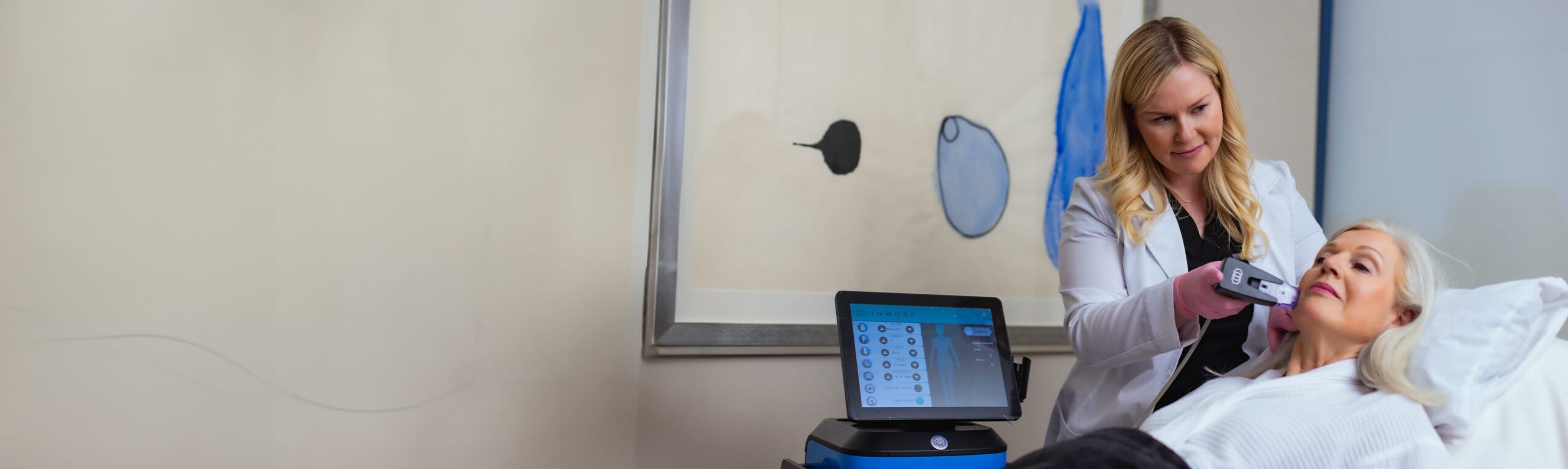
Ultherapy uses focused ultrasound to heat tissue beneath the skin’s surface, which triggers new collagen as the tissue heals. FACES+ in San Diego uses it on the face, neck and décolletage. Downtime is minimal. Some patients see mild redness, swelling or bruising for a few days. Results build over the following months as collagen forms.
Sofwave
Sofwave also relies on ultrasound to stimulate collagen. FACES+ uses it to treat fine lines and wrinkles and to lift the brows, chin and neck, with minimal downtime.

Ellacor
Ellacor takes a mechanical approach. It removes tiny cores of skin without surgery, and the skin tightens as it closes and heals. It suits texture and laxity concerns in patients who want change beyond what heat alone produces. FACES+ often pairs treatments like Ellacor with exosome serums to support recovery.
Thread lift
A thread lift sits between devices and surgery. A clinician places dissolvable threads under the skin to lift and re-contour deeper layers. The procedure takes 30 to 60 minutes, and FACES+ notes that some patients benefit from a series of sessions. Results last months to years depending on the patient.
Surgery
A facelift repositions the deep tissue and removes excess skin. It carries surgical risk and a real recovery: one to two weeks of swelling and bruising, a return to light activity around day ten to fourteen, and no strenuous exercise for four to six weeks. FACES+ tells patients to expect results of ten years or longer.
How to decide
Try a device if your skin has started to lose firmness, your jawline still holds its shape, and you want gradual change with little downtime.
Consider threads if you want a visible lift in a specific area and accept that the result is temporary.
Talk to a surgeon if you see jowls in photos, loose skin under the chin, or deep folds that makeup no longer hides. Repeated device sessions add up. Over five years, a patient chasing a surgical result with devices can spend a significant share of the cost of surgery without reaching it.
The case for combining
Devices and surgery do not compete as often as marketing suggests. Many patients use Ultherapy or Sofwave in their forties to delay surgery, then use the same tools after a facelift to maintain skin quality. FACES+ offers both under one roof, which lets its team plan the sequence rather than sell a single treatment.
Dr. Steven R. Cohen, the practice’s founder and a board-certified plastic surgeon, describes the aim across all of them as a face that looks rested and natural. The practice’s nurse injectors have worked alongside him for more than 17 years.
Before you book
- Ask the clinician what they expect the treatment to achieve on your face.
- Ask how many sessions most patients need, and what each one costs.
- Ask what they would recommend if you had no budget limit. The answer tells you whether a device is the right tool or just the available one.